
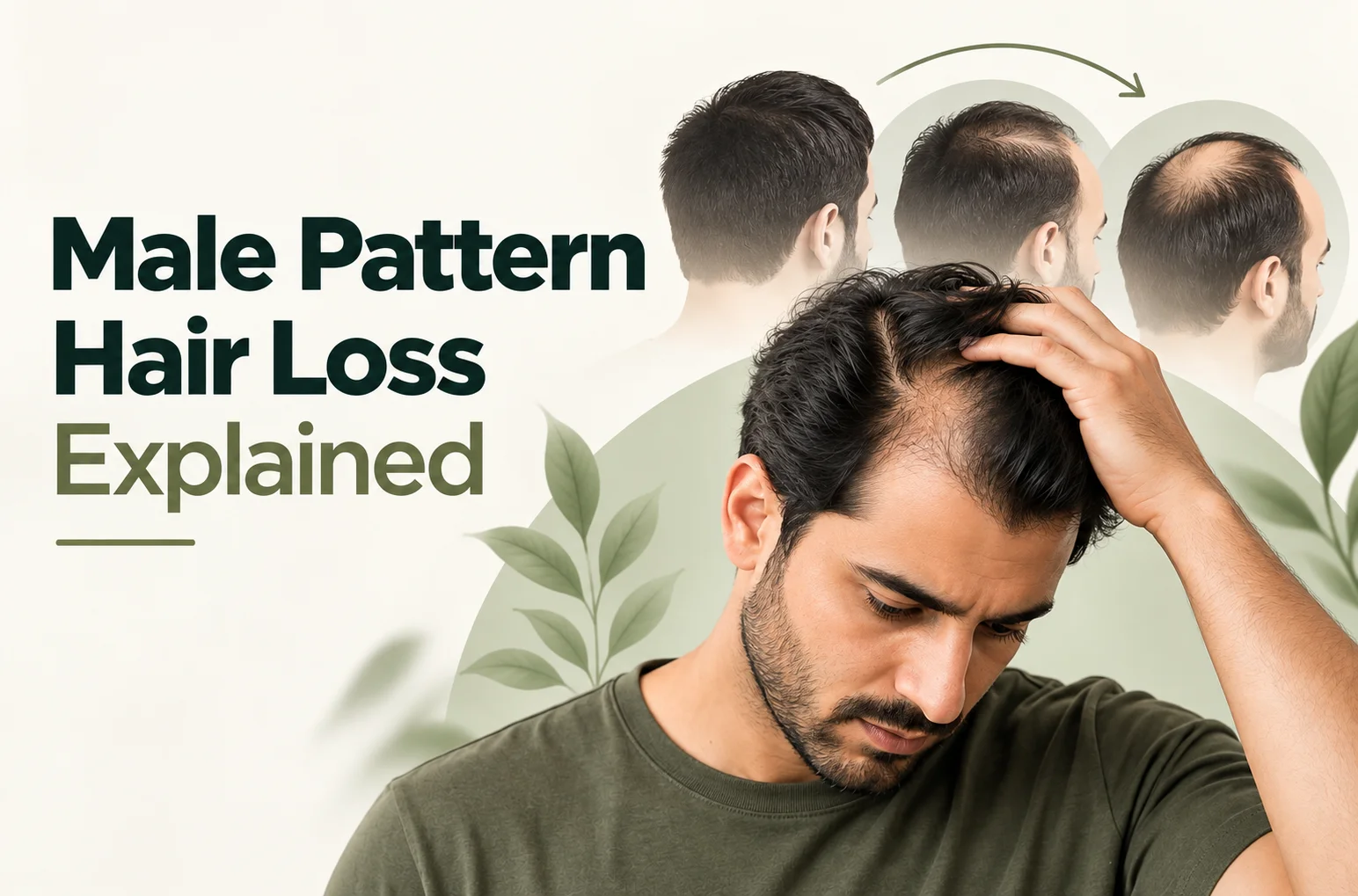
Losing hair is one of the most common concerns men face today, and it often starts earlier than expected — sometimes in the mid-20s. If you’ve noticed a receding hairline, thinning crown, or excess strands on your pillow, you’re likely dealing with male pattern hair loss (also known as male pattern baldness, the most widespread form of men hair loss pattern worldwide. The good news: with the right hair loss treatment for men, this condition can be managed and even reversed in its early stages.
What Is Male Pattern Hair Loss?
Male pattern hair loss (medically known as androgenetic alopecia) is a genetically driven condition where hair follicles gradually shrink due to sensitivity to a hormone called DHT (dihydrotestosterone). Over time, follicles produce thinner, shorter strands until they stop growing altogether — leading to visible hair loss male pattern baldness.
This is different from temporary hair shedding caused by stress or nutritional gaps — pattern baldness follows a predictable, progressive path:
- Receding hairline — thinning starts at the temples, forming an “M” shape
- Crown thinning — a bald spot develops at the back of the head
- Diffuse thinning — hair becomes visibly sparse across the scalp
- Complete pattern baldness — in advanced stages, only a horseshoe-shaped band of hair remains at the sides and back
Recognizing which stage you’re in is the first step toward choosing an effective male hair loss treatment.
What Causes the Men Hair Loss Pattern?
Several factors drive the men hair loss pattern we see so often:
- Genetics — a family history of baldness significantly raises your risk
- Hormonal sensitivity — some men’s follicles are more reactive to DHT than others
- Age — hair thinning tends to accelerate after 30
- Lifestyle stress — poor sleep, smoking, and chronic stress worsen shedding
- Nutritional deficiencies — low protein, iron, and biotin intake weaken hair strands
- Scalp health — dandruff, excess oil, and clogged follicles slow regrowth
Understanding your specific triggers helps in picking a targeted hair fall treatment for men rather than a generic, one-size-fits-all fix.
Hair Treatment for Hair Loss: What Works
No single product fixes everything. The most effective hair treatment for hair loss combines scalp care, nutrition, and consistency.
1. Nourish from within
Hair is built from the inside. Targeted nutrition and herbal support help address the deficiencies and stress that make hair fall worse.
Keshvapsi Morning Tablets (₹750) are made to support hair health from within as part of your daily routine. Keshvapsi Night Tablets (₹680) continue that support overnight, when your body repairs itself.
2. Care for the scalp from outside
A healthy scalp is the base for hair growth. Serums deliver active ingredients straight to the roots, where thinning begins.
Keshvapsi Day Serum (₹500) is for daytime use to support the hairline and thinning areas. Keshvapsi Night Serum (₹570) is for overnight scalp nourishment and root support.
3. Key ingredients to look for
Look for ingredients with a track record in hair care:
- Redensyl for supporting follicle activity
- Ashwagandha for helping the body manage stress, a known trigger of hair fall
- Amla for scalp nourishment and stronger-looking hair
- Bhringraj for scalp health
- Biotin for hair strength
- Brahmi for scalp and stress support
4. Follow a complete routine
Using one product occasionally rarely shows results. The Keshvapsi 4-step system is designed so that inside and outside care work together, morning and night:
| Step | Product | Price |
|---|---|---|
| Morning | Morning Tablets | ₹750 |
| Day | Day Serum | ₹500 |
| Night | Night Tablets | ₹680 |
| Night | Night Serum | ₹570 |
Or choose the complete Keshvapsi Hair Growth Kit at ₹2,500, which brings all four steps together in one pack.
5. Medical options
For moderate to advanced male pattern baldness, a dermatologist may suggest prescription options. A doctor can also check for other causes such as thyroid issues, anaemia, or vitamin deficiencies. If hair loss is rapid, patchy, or comes with scalp pain, see a doctor first.
Lifestyle Habits That Support Hair Regrowth
- Eat protein-rich foods (eggs, dal, paneer, nuts)
- Sleep 7 to 8 hours
- Manage stress with exercise, walking, or meditation
- Avoid very hot water and harsh shampoos
- Keep your scalp clean, and avoid heavy styling products
- Stay consistent: hair cycles are slow, so give any routine at least 3 to 4 months before judging results
How Long Does It Take to See Results?
Hair grows slowly, so expect fewer shed hairs first, then gradual improvement in density and strength over several months. Results vary by person, age, and how advanced the hair loss is.